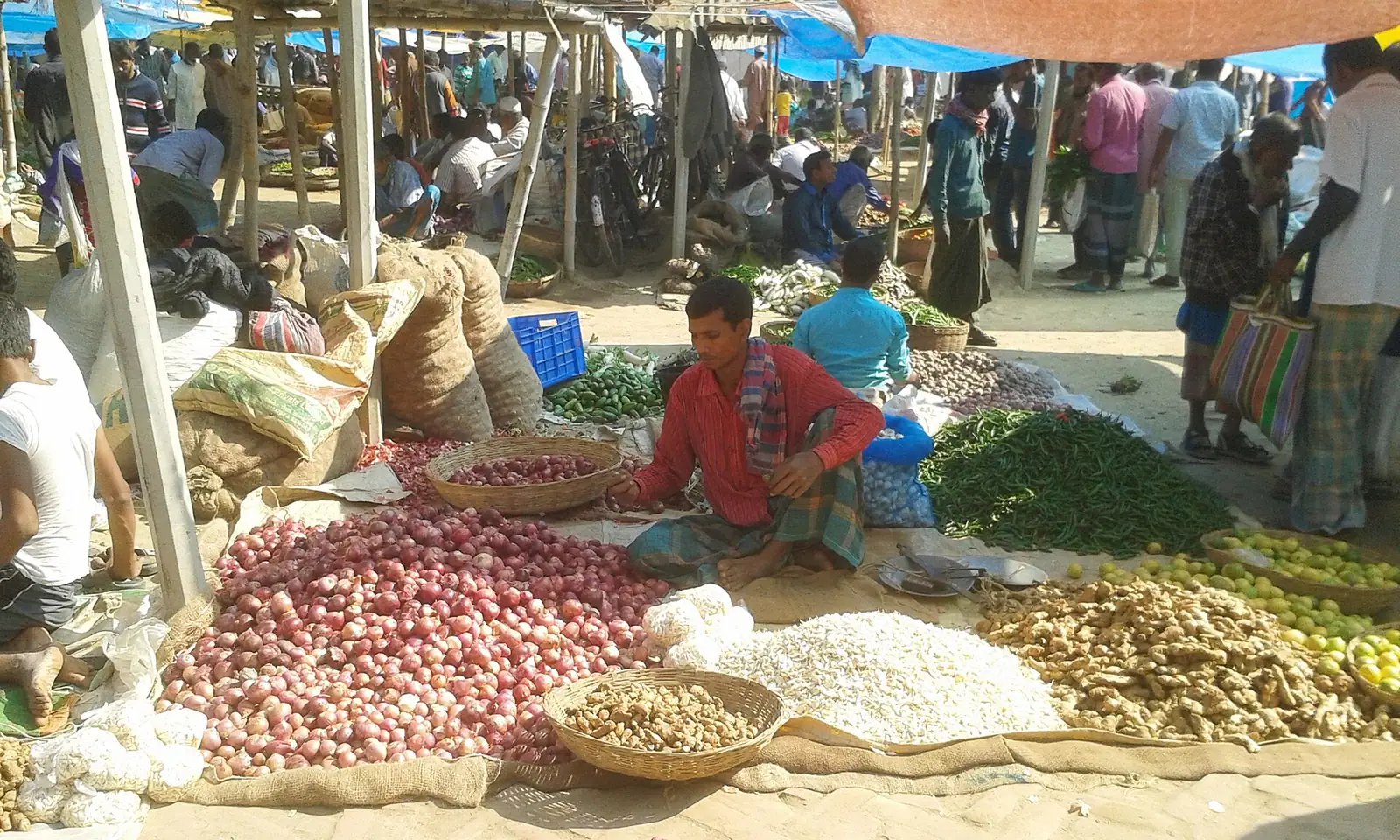
We carry money
Acceptance a shopkeeper can actually use, set up once for every provider through Bangla QR — then the savings, remittance, insurance and bill payments that follow through the door trust opened.
Bangladesh's last mile
Not because the technology is missing — bKash, Nagad, Rocket and Bangla QR all work. Because nobody walked down that lane, sat on that plastic stool, explained it in the shopkeeper's language, and stayed long enough to be trusted.
Priyo Agent is that walk.
আপনার পাশেই, আপনার প্রিয় এজেন্ট
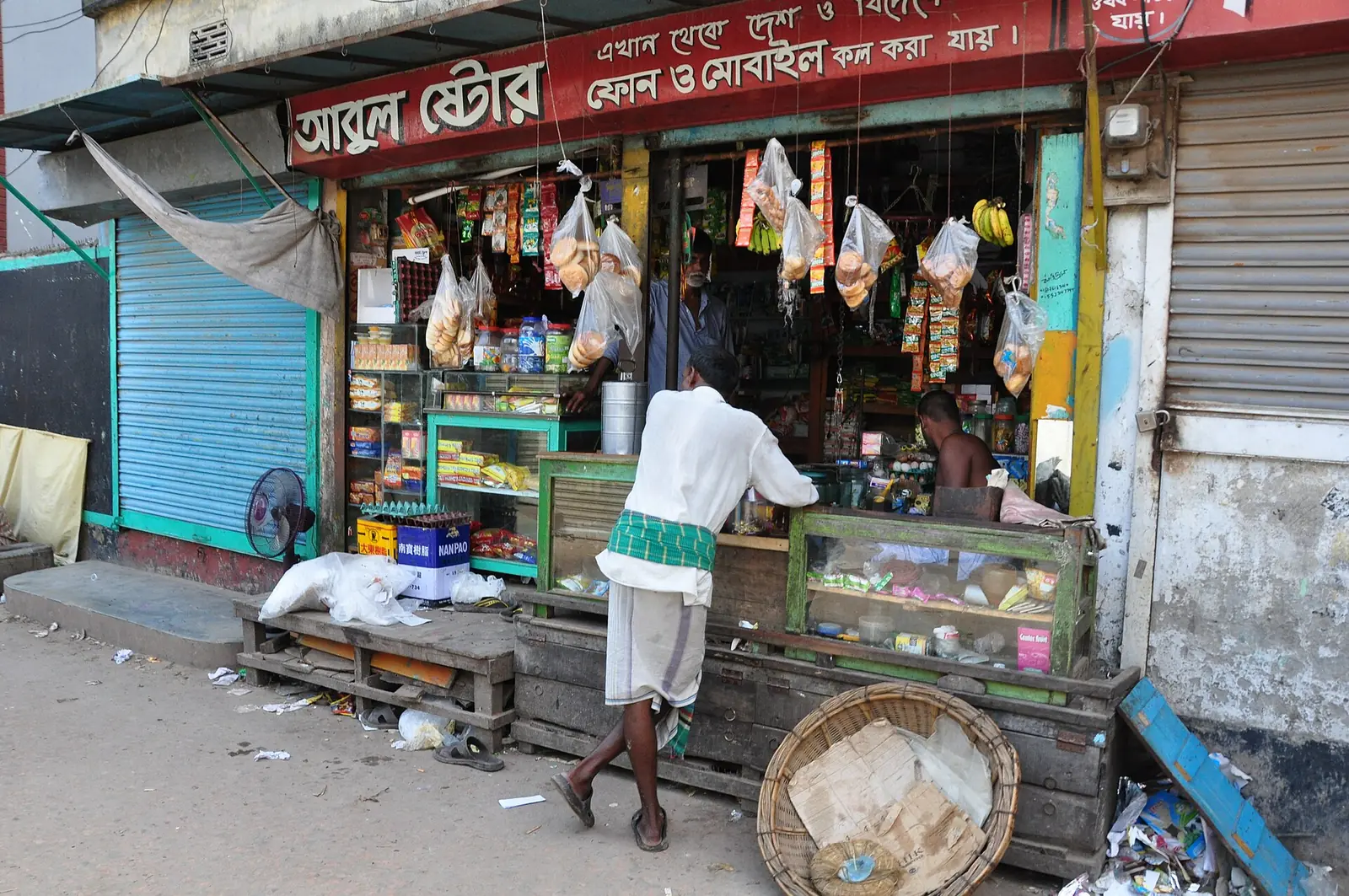
A shop like this one is 41.8% of every economic unit in Bangladesh — the single largest category in the census.
4.5m
~3m
5%
65%
Every figure on this site is sourced, and anything we worked out ourselves is labelled an estimate. The full arithmetic is here.
The coverage gap
~3m
Bangladesh has around 4.5 million small shops. Bangladesh Bank recorded 1.54 million MFS merchant accounts — and those count accounts, not shops, so a shop on two wallets is counted twice.
This is not a segment of our market. It is the majority of it.
1.0–1.5 million shops can take a digital payment. Bangladesh Bank records 1.54m merchant accounts, but those are accounts rather than shops — a shop on both bKash and Nagad is counted twice.
Around 3 million shops cannot. Roughly two in every three. Each dot here is 100,000 shops.
The real problem is not that Bangladesh lacks wallets. It is that Bangladesh lacks tills. A wallet with nowhere to spend is just a slower way to fetch cash.
~3m
of them cannot accept a digital taka
Shop count less the merchant accounts on record — and those accounts are duplicated across providers, so the true gap is likely wider.
Our estimateBangladesh Bank
5%
of mobile money is someone paying a shop
Tk 86bn of merchant payments a month against Tk 1.72tn of total MFS volume. It was 4.36% in 2021.
early 2025 ·Bangladesh Bank
65%
of transaction value is still not digital
Digital reached Tk 9.23 lakh crore — 34.6% — and about a fifth of that was RTGS, not shop tills.
Oct 2025 ·New Age
Bangladesh has 1.83 million MFS agents and 1.54 million merchant accounts. We taught a whole country how to turn digital money back into paper. We never taught the paper to stay digital. Of roughly 237 million MFS accounts, only 37.6% are active.
What we do
We recruit, train and support local people — many of them women — to be the financial front door for the shops in their own neighbourhood. Not a sales visit. A standing relationship.
Sit down. Buy a cup of tea. Explain what a digital taka is and where it goes. No lanyard, no script, no sales visit.
Bangla QR plus the wallets their customers already carry — so a single setup works across every provider instead of stacking one brand's sticker on another's.
The failed transaction, the forgotten PIN, the settlement question, the reconciliation confusion. Activation is our metric, not acquisition. We are paid on live transactions, not signatures.
A cash-only shop is invisible: no record, no credit score, no working capital. Every month of transactions is collateral a shopkeeper never had before.
Savings, remittance, insurance, utility bills, government payments — through the door that trust opened.
One network, two jobs
Most companies bolt social work onto a business. Ours runs on the same wiring — because in a market where the barrier is trust rather than technology, being visibly useful to a community is a distribution strategy.
Acceptance a shopkeeper can actually use, set up once for every provider through Bangla QR — then the savings, remittance, insurance and bill payments that follow through the door trust opened.
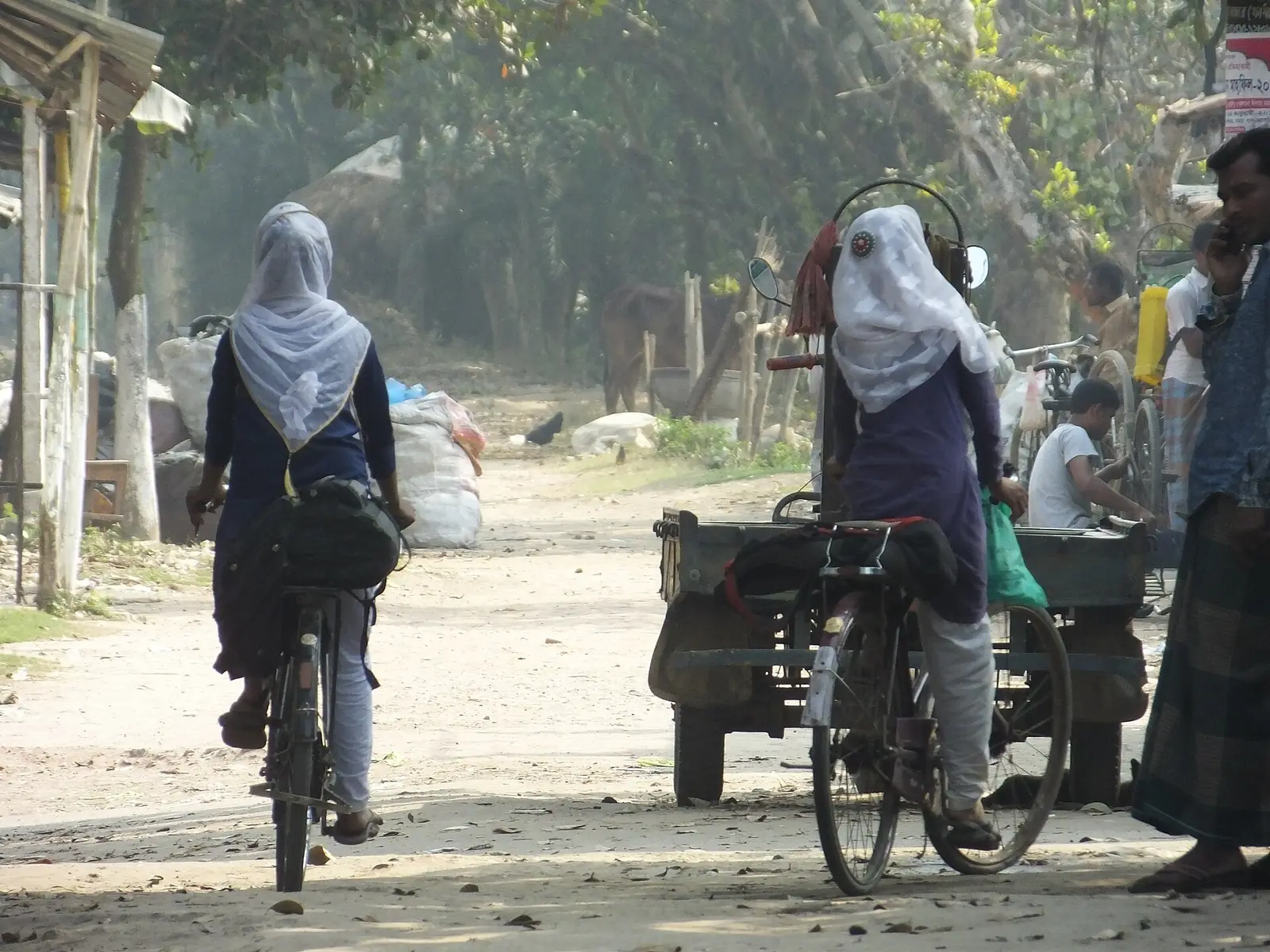
Women's education, food for families having a bad month, and flood relief — delivered through the same agents and the same shops, because they are already there and already trusted.
The agent who brought relief to that lane in September is the agent whose payment product the shopkeeper adopts in October. Nothing else buys that.
Why now
Bangladesh Bank wants 75% of transactions cashless by 2027 and 80% of payments digital within the decade. Against 34.6% digital in October 2025, that is unreachable through malls and supermarkets. It runs through the mudir dokan.
Every bank, MFS provider, PSP and PSO must replace its proprietary QR codes at merchant points with the interoperable Bangla QR, with penalties up to Tk 30 lakh. Suddenly the whole industry needs merchants onboarded — and interoperability means one visit can serve all of them.
Wallet growth has plateaued into dormancy — of roughly 237 million MFS accounts, only 37.6% are active. The next decade of growth has to come off the 5% merchant-payment line.
Agent banking runs 21,023 outlets through 15,838 agents serving 24.67 million accounts, 85.5% of them rural. Rural Bangladesh is not a distribution mystery. It just needs someone to show up.
The country we work in
Four in ten economic units in this country are a shop. Nine in ten are micro or cottage scale. Almost two-thirds sit in a village.
Up 49.68% in a decade.
The single largest category — roughly 4.9 million units.
7,385,828 of 11,702,792.
A further 38.7% are cottage scale. Nine in ten are one of the two.
Persons engaged across all economic units.
In a food and grocery market worth around US$36 billion.
For MFS providers and banks
The remaining shops are not a technology problem. They are a presence problem, and presence does not scale from a head office.
Named as the partners we want to work with. Priyo Agent is not affiliated with or endorsed by any of them.
One Bangla QR visit activates a merchant for the whole ecosystem, not one brand.
Not on signatures — because dormancy is the industry's actual problem.
A newly visible merchant is a new CMSME customer against a US$2.8bn financing gap.
An audited delivery channel for education, food and relief.
Straight answers
It is our own arithmetic, and we label it that way everywhere. Bangladesh has roughly 4.5 million small retail shops; Bangladesh Bank recorded 1.54 million MFS merchant accounts across all providers in December 2024. Those are accounts rather than shops, so a shop accepting both bKash and Nagad is counted twice — meaning the number of uniquely enabled shops is realistically 1.0–1.5 million, and the uncovered remainder is around three million. It is an estimate, and a conservative one.
They have built extraordinary rails, and we are not trying to replace them — we want to carry them further. The remaining shops are not a technology problem, they are a presence problem, and presence does not scale from a head office. Because Bangla QR is interoperable, one visit from us can activate a merchant for every provider at once.
On live transactions rather than signatures. That is deliberate: the industry's problem is dormant merchants, so a model paid on acquisition would reproduce exactly the failure we exist to fix.
Because in a market where the barrier is trust rather than technology, being visibly useful to a community is a distribution strategy. The agent who brought relief to a lane in September is the agent whose payment product the shopkeeper adopts in October. And Bangladeshi banks already spend hundreds of crore on CSR that struggles to land — we are a channel for it.
No. bKash uses the same words for a customer's designated favourite cash-out agent. We are a separate organisation, not affiliated with or endorsed by bKash, and we say so plainly whenever it comes up.
For MFS providers and banks
Whether you are an MFS provider with a merchant target, a bank with a Bangla QR deadline and a CSR budget, or a funder backing financial inclusion — start with a conversation.